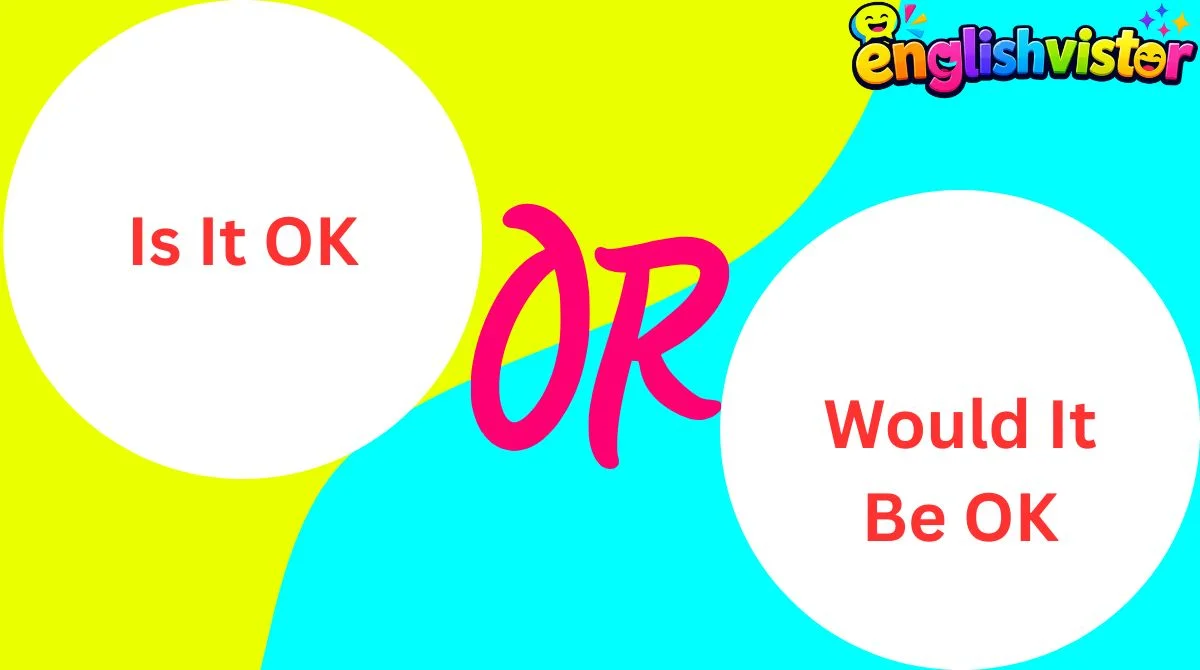
Many English learners ask about is it ok or would it be ok because both expressions look almost the same. The difference is small, but the meaning and feeling can change depending on the situation Is It OK or Would It Be OK.
You may hear someone say, “Is it OK if I sit here?” You may also hear, “Would it be OK if I sat here?” Both sentences are correct. So, why do native speakers choose one instead of the other?Is It OK or Would It Be OK.
The simple answer is that “Is it OK?” usually asks about something more directly and immediately. “Would it be OK?” often sounds more polite, careful, or less direct. It can be especially useful when you are asking for permission, making a request, or talking about a possible situation.
Understanding is it ok or would it be ok can make your English sound much more natural. It is not only a grammar question. It is also about politeness, tone, context, and the speaker’s attitude.Is It OK or Would It Be OK.
After learning this difference, you will know when to use each expression, how to form questions correctly, and how native speakers use these phrases in everyday conversations. You will also learn some easy tricks that can help you choose the right form quickly.Is It OK or Would It Be OK.
What Does “Is It OK?” Mean?
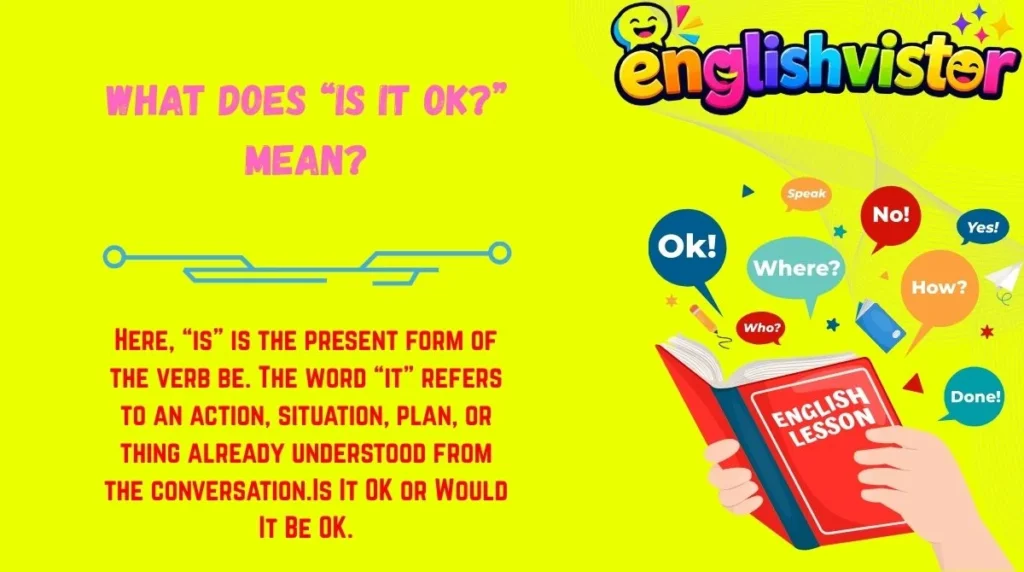
“Is it OK?” is a direct way to ask whether something is acceptable, allowed, suitable, or not a problem.Is It OK or Would It Be OK.
Here, “is” is the present form of the verb be. The word “it” refers to an action, situation, plan, or thing already understood from the conversation.Is It OK or Would It Be OK.
For example:
Is it OK if I use your phone?
The speaker wants to know whether using the other person’s phone is acceptable.
When considering is it ok or would it be ok, remember that “Is it OK?” normally focuses on a situation that is real, current, or about to happen.
When Should You Use “Is It OK?”
You can use “Is it OK?” when:
- You want direct permission.Is It OK or Would It Be OK.
- You are asking whether something is acceptable.
- You want to check a current situation.Is It OK or Would It Be OK.
- You are talking about something that is likely to happen soon.
- You are speaking with someone with whom a direct question feels comfortable.
The expression is common in everyday spoken English.
Examples of “Is It OK?”
- Is it OK if I open the window?
- Is it OK to park here?
- Is it OK if we start now?
- Is it OK to call you tonight?
- Is it OK if I sit beside you?
- Is it OK to bring my friend?
- Is it OK if I leave early today?
- Is it OK to use this computer?
These sentences ask about permission or acceptability.Is It OK or Would It Be OK.
Notice that “Is it OK to…” is followed by the base form of a verb:
Is it OK to leave?
Is it OK to ask?
Is it OK to bring my brother?
Another common structure is:
Is it OK if + subject + verb?
For example:
Is it OK if I leave early?
Is it OK if she comes with us?
A Common Learner Confusion
Some learners think “Is it OK?” is too informal or incorrect. It is neither. It is a very normal expression in everyday English.
You can also write “Is it okay?” The spellings OK and okay are both widely used. “Okay” is often preferred in more formal writing, while “OK” is very common in texts, messages, and casual writing.
When thinking about is it ok or would it be ok, do not assume that one is grammatically correct and the other is grammatically wrong. Both are correct. The important difference is usually the situation and level of politeness.
What Does “Would It Be OK?” Mean?
“Would it be OK?” is a polite and slightly softer way to ask whether something would be acceptable.Is It OK or Would It Be OK.
The word “would” makes the question less direct. It often creates a little distance between the speaker and the request.Is It OK or Would It Be OK.
For example:
Would it be OK if I left early today?
This sounds polite and careful. The speaker is not simply asking, “Is this allowed?” They are gently asking whether the other person would be comfortable with the idea.
This is an important point when learning is it ok or would it be ok.Is It OK or Would It Be OK.
When Should You Use “Would It Be OK?”
Use “Would it be OK?” when:
- You want to sound polite.
- You are making a request.
- You are not sure whether the other person will agree.
- You are talking about a possible or proposed action.
- You want to avoid sounding too direct.
- You are speaking to a teacher, manager, customer, stranger, or someone you do not know well.Is It OK or Would It Be OK.
Examples of “Would It Be OK?”
- Would it be OK if I called you tomorrow?
- Would it be OK if we changed the meeting time?
- Would it be OK to bring my children?
- Would it be OK if I used your laptop?
- Would it be OK to leave a little early?
- Would it be OK if I asked you a question?
- Would it be OK to sit here?
- Would it be OK if we came back later?
These questions are especially useful when you want to show consideration.
Why Does “Would” Sound More Polite?
English often uses past forms such as would, could, and might to make requests softer.Is It OK or Would It Be OK.
Compare:
Is it OK if I use your car?
with:
Would it be OK if I used your car?
The first sentence is perfectly polite in many situations. The second one sounds more careful and less direct.Is It OK or Would It Be OK.
This is why the choice between is it ok or would it be ok is often connected to tone rather than basic correctness.Is It OK or Would It Be OK.
“Would It Be OK If I…” and the Past Form
A common pattern is:
Would it be OK if + subject + past simple?
For example:
Would it be OK if I came tomorrow?
Would it be OK if I used your phone?
Would it be OK if we left early?
The past form here does not necessarily mean that the action happened in the past. It can help make the request more polite or hypothetical.
Difference Between “Is It OK?” and “Would It Be OK?”
The main difference between is it ok or would it be ok is the speaker’s attitude toward the situation.Is It OK or Would It Be OK.
Both expressions can ask for permission. However, “Is it OK?” is generally more direct and connected to a real or current situation, while “Would it be OK?” is generally softer and more tentative.Is It OK or Would It Be OK.
| Expression | Main idea | Tone | Typical use |
|---|---|---|---|
| Is it OK? | Is this acceptable now? | Direct and natural | Current or immediate situations |
| Would it be OK? | Would this be acceptable? | Softer and more polite | Requests and possible situations |
| Is it OK if I…? | Do you allow this? | Direct but friendly | Everyday permission |
| Would it be OK if I…? | Would you be comfortable with this? | More careful | Polite requests |
1. Direct vs. Softer
Consider these examples:
Is it OK if I sit here?
Would it be OK if I sat here?
Both are correct. The first is more direct. The second is softer.Is It OK or Would It Be OK.
If you are talking to a close friend, the first sentence may sound completely natural.
If you are asking a stranger, teacher, manager, or someone whose permission matters, the second sentence may sound more respectful.
2. Present Situation vs. Possible Situation
“Is it OK?” often asks about something that is happening now or is about to happen.
Is it OK if I leave now?
The speaker is ready to leave.
“Would it be OK?” can introduce a suggestion or possible action.
Would it be OK if I left a little early tomorrow?
The speaker is discussing a possible arrangement.
3. Grammar Structure
A common structure with “Is it OK?” is:
Is it OK if + subject + present verb?
Example:
Is it OK if I take this chair?
With “Would it be OK?”, you commonly see:
Would it be OK if + subject + past verb?
Example:
Would it be OK if I took this chair?
The past form took does not mean the action happened already. It is part of a polite or hypothetical structure.
4. Meaning Is Often Very Close
It is important not to make the difference bigger than it really is.
In everyday English, these two sentences may communicate almost exactly the same request:
Is it OK if I open the door?
Would it be OK if I opened the door?
The main change is the tone.
The second sentence is generally more tentative and polite.
5. Context Matters
There is no single rule saying that you must always use one form in a certain situation.
Imagine you are with a friend:
Is it OK if I borrow your pen?
That sounds perfectly natural.
Now imagine you are speaking to your manager:
Would it be OK if I left early today?
The softer form may be a better choice because the request involves someone’s authority or permission.
So, when deciding between is it ok or would it be ok, think about both grammar and social context.
Grammar Rules You Must Remember
Rule 1: “Is” Is a Present Form
Use is when you are asking about the present situation or something you see as real and immediate.
Is it OK to sit here?
Is it OK if I use this chair?
The question is about whether the action is acceptable.
Rule 2: “Would” Makes the Request Softer
Would often makes a request sound less direct.
Would it be OK if I opened the window?
This can sound more considerate than:
Open the window, OK?
The first form gives the other person more space to say yes or no.
Rule 3: Use “to + Base Verb”
Both structures can be followed by to + base verb.
Is it OK to leave?
Would it be OK to leave?
Do not say:
Is it OK to left?
The correct form is:
Is it OK to leave?
Rule 4: “If” Can Introduce a Permission Request
You can use if after either expression.
Is it OK if I come tomorrow?
Would it be OK if I came tomorrow?
The second example commonly uses the past form to create a softer, more hypothetical request.
Rule 5: “OK” and “Okay” Have the Same Basic Meaning
You can write:
Is it OK?
or:
Is it okay?
Both are acceptable.
Likewise:
Would it be OK if I called later?
Would it be okay if I called later?
The meaning does not change.
Common Mistakes Students Make
Mistake 1: Thinking One Expression Is Wrong
A common problem with is it ok or would it be ok is believing that only one expression is grammatically correct.
That is not true.
Both are correct. The choice depends on context, tone, and what you want to communicate.
Wrong idea:
“Would it be OK?” is correct, but “Is it OK?” is wrong.
Better understanding:
Both are correct, but they can have different levels of directness.
Mistake 2: Using the Wrong Verb After “To”
Some learners write:
Is it OK to went home?
This is incorrect.
After to, use the base form:
Is it OK to go home?
The same rule applies to the other expression:
Would it be OK to go home?
Mistake 3: Using “Would” Without Understanding the Tone
Learners sometimes use would everywhere because they think it always sounds more correct.
For example:
Would it be OK if I eat lunch now?
This is understandable, but in a particular context, a direct present question may be more natural:
Is it OK if I eat lunch now?
When using would, consider whether you are making a polite request or discussing a possible situation.
Mistake 4: Forgetting the Past Form After “Would It Be OK If…”
A common polite structure is:
Would it be OK if I came tomorrow?
Not:
Would it be OK if I come tomorrow?
The present form can sometimes occur in informal speech, but learners should understand the traditional and widely taught pattern:
Would it be OK if + past simple
Examples:
Would it be OK if I called you later?
Would it be OK if she joined us?
Mistake 5: Thinking “Would” Always Means Past Time
This is another major source of confusion.
In:
Would it be OK if I borrowed your book?
borrowed does not mean the borrowing already happened.
The past form helps express a hypothetical or polite request.
Think about it as creating a little distance from the request.
Easy Trick to Remember the Difference
Here is a simple classroom trick for remembering is it ok or would it be ok.
Think:
IS = direct and current.
WOULD = softer and more tentative.
Imagine you are standing beside an open window and want to close it.
You might ask your friend:
Is it OK if I close the window?
You are asking about a real action right now.
Now imagine you want to ask your manager whether you can leave work early tomorrow:
Would it be OK if I left early tomorrow?
The request is more careful.
You can also remember it this way:
“Is” checks the situation. “Would” politely tests an idea.
This is not an absolute rule for every sentence, but it is a very useful guide for beginners.
When deciding between is it ok or would it be ok, first ask yourself:
“Am I asking about something directly, or am I making a softer request?”
If it is direct and immediate, “Is it OK?” is often a good choice.
If it is a request that you want to make more gently, “Would it be OK?” is often better.
Daily Life Examples
Examples You Can Hear in Real Conversations
Here are some natural examples showing how is it ok or would it be ok works in everyday English.
1. Asking a Friend
Is it OK if I borrow your charger?
You are asking a friend for permission. The direct form sounds natural.
2. Asking a Teacher
Would it be OK if I submitted my homework tomorrow?
The softer form is useful because you are making a request to a teacher.
3. Asking at Work
Would it be OK if I worked from home on Friday?
This sounds respectful when speaking to a manager.
4. Asking Someone to Move
Is it OK if I sit here?
This is a simple everyday question.
5. Making a Future Request
Would it be OK if I called you after dinner?
You are suggesting a possible future action.
6. Asking About Parking
Is it OK to park here?
You want to know whether parking is allowed.
7. Asking for a Small Change
Would it be OK if we moved the meeting to Monday?
The speaker is suggesting a change and wants the listener’s approval.
8. Asking to Use Something
Is it OK if I use your computer for a minute?
This is a common request in everyday conversation.
9. Speaking Politely to a Stranger
Would it be OK if I asked you something?
This is a gentle way to introduce a question.
10. Talking About a Plan
Would it be OK to bring another person to the event?
The speaker wants to check whether the plan is acceptable.
These examples show why is it ok or would it be ok is not simply a matter of “right versus wrong.” Both forms can work. The speaker chooses based on the situation and desired tone.
Practice Section
Choose the Correct Option
Try each sentence before checking the answers. Think about whether the situation sounds direct, current, or more polite and tentative.
1. You are asking your close friend about using their phone.
A. Is it OK if I use your phone?
B. Is it OK if I used your phone?
2. You are politely asking your manager about leaving early tomorrow.
A. Would it be OK if I left early tomorrow?
B. Would it be OK if I leave early tomorrow?
3. You are asking whether parking is allowed here.
A. Is it OK to park here?
B. Is it OK to parked here?
4. You want to make a polite suggestion about changing a meeting.
A. Would it be OK if we changed the meeting time?
B. Would it be OK if we change the meeting time?
5. You are asking a friend if you can sit beside them.
A. Is it OK if I sit here?
B. Is it OK if I sat here?
Answers
1. A — Is it OK if I use your phone?
The direct present form works naturally for this immediate request.
2. A — Would it be OK if I left early tomorrow?
The past form after would makes the request softer.
3. A — Is it OK to park here?
After to, use the base verb park.
4. A — Would it be OK if we changed the meeting time?
This is a polite suggestion about a possible change.
5. A — Is it OK if I sit here?
This is a direct, natural request about a current situation.
FAQs
What is the difference between “Is it OK?” and “Would it be OK?”
Both expressions can ask whether something is acceptable. “Is it OK?” is usually more direct and often refers to a current or immediate situation. “Would it be OK?” sounds softer and is often used for polite requests or possible situations.
Is “Would it be OK?” more polite than “Is it OK?”
Generally, yes. “Would it be OK?” can sound more tentative and considerate. However, “Is it OK?” is not rude. It is very common in friendly, everyday English, especially when the relationship is informal.
Can I use “Is it OK?” in a question?
Yes. In fact, “Is it OK?” is already a question. You can also add a specific action:
Is it OK if I leave now?
or:
Is it OK to leave now?
Both structures are common.
Is “Would it be OK if I…” grammatically correct?
Yes. It is a standard and useful English structure for polite requests.
For example:
Would it be OK if I called you tomorrow?
The past form called does not necessarily refer to past time. It helps make the request more tentative.
Which is better: “Is it OK if I go?” or “Would it be OK if I went?”
Both can be correct. “Is it OK if I go?” is more direct and often sounds natural in casual conversation. “Would it be OK if I went?” is softer and can sound more polite or hypothetical.
Should I write “OK” or “okay”?
Both spellings are accepted. OK is very common in everyday writing, messages, and informal communication. Okay is also standard and may look slightly more natural in some types of formal prose. The meaning is the same.
Conclusion
The difference between is it ok or would it be ok is mainly about tone, context, and how direct the request sounds.
Use “Is it OK?” when you want to ask about something directly, especially when the situation is current or immediate. For example, “Is it OK if I sit here?” is a simple and natural question.
Use “Would it be OK?” when you want to make a request more gently. For example, “Would it be OK if I left early?” sounds more careful and polite.
Remember the easy rule: IS is usually more direct, while WOULD is usually softer and more tentative. But do not think of one as correct and the other as incorrect. Both expressions have an important place in everyday English.
The best way to master is it ok or would it be ok is to listen to real conversations and practice making your own sentences. Once you understand the difference in tone, choosing between them becomes much easier.

Hi, I’m Isabella Foster, an English language writer passionate about making grammar, vocabulary, and communication skills easy to understand. At EnglishVistor, I create clear, practical, and engaging learning resources to help learners improve their English with confidence.