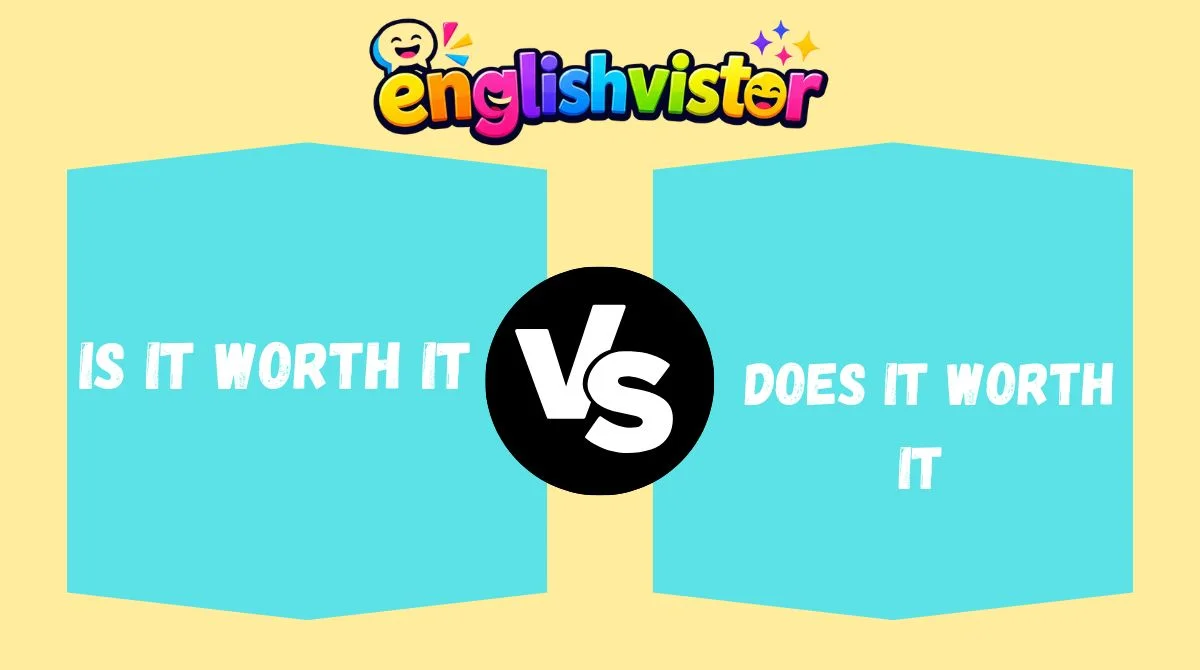
Many English learners feel confused when they hear phrases like “Is it worth it?” and “Does it worth it?”. Both sentences look almost the same, so it is easy to think that both are correct. However, only one of them follows standard English grammar rules.Is It Worth It vs Does It Worth It.
This small grammar difference creates a lot of problems for students, especially beginners and non-native speakers. A single wrong helping verb can change whether a sentence sounds natural or incorrect to a native English speaker.Is It Worth It vs Does It Worth It.
The phrase “Is it worth it?” is very common in daily conversations. People use it when they want to know if something is valuable, useful, or a good decision. You can hear it when people talk about buying products, spending time, learning skills, traveling, or making choices.Is It Worth It vs Does It Worth It.
Understanding this grammar point will help you speak more confidently and avoid a common English mistake. You will learn why “Is it worth it?” is correct, why “Does it worth it?” is wrong, and how to use similar sentence patterns correctly.
By the end, you will understand the grammar behind the phrase, remember the rule easily, and use it naturally in everyday English conversations Is It Worth It vs Does It Worth It.
What Does “Is It Worth It” Mean?
“Is it worth it?” is a correct English question used to ask if something has enough value or benefit compared with the cost, time, effort, or trouble involved.
The word worth means having value. The word it refers to the thing, activity, decision, or experience being discussed.Is It Worth It vs Does It Worth It.
For example:
- You spend $100 on a course. You ask, “Is it worth it?”
- You travel for five hours to visit a place. You ask, “Is it worth it?”
- You work hard to learn a new skill. You ask, “Is it worth it?”
The phrase does not only talk about money. It can also talk about time, energy, emotions, and effort.Is It Worth It vs Does It Worth It.
Grammar Rule
The structure is:
Is + subject + worth + noun/pronoun/verb-ing?
Examples:
- Is it worth it?
- Is the movie worth watching?
- Is this book worth buying?
- Is learning English worth the effort?
Here, is is the main verb because the sentence uses the adjective worth.Is It Worth It vs Does It Worth It.
Many learners make a mistake because they think every question needs do/does. But English questions are not always formed with do or does.Is It Worth It vs Does It Worth It.
When the main verb is be (am, is, are, was, were), we usually move it to the beginning.Is It Worth It vs Does It Worth It.
Examples:
Statement:
- It is worth it.
Question:
- Is it worth it?
More examples:
- Is it worth the money?
- Is it worth your time?
- Is it worth learning this skill?
- Is this phone worth buying?
- Is the trip worth the cost?
- Is it worth waiting for?
- Is this job worth the stress?
- Is studying every day worth the effort?
Common Learner Confusion
Many students know that “does” is used for questions, so they create sentences like:
- Does it worth it?
The problem is that does must be followed by the base form of a verb. However, worth is not being used as a normal action verb here. It works like an adjective in this expression.Is It Worth It vs Does It Worth It.
The correct pattern is:
- Is it worth it?
Not:
- Does it worth it?
What Does “Does It Worth It” Mean?
“Does it worth it?” is not a correct standard English sentence.Is It Worth It vs Does It Worth It.
Although many learners say it, native English speakers do not normally use this structure. The mistake happens because learners try to follow the common question pattern:
Does + subject + verb?
Examples:
- Does it work?
- Does it help?
- Does it matter?
These sentences are correct because work, help, and matter are action verbs.
However, worth does not work the same way in this expression.Is It Worth It vs Does It Worth It.
Incorrect:
- Does it worth it?
Correct:
- Is it worth it?
Why Is “Does It Worth It” Wrong?
The helping verb does needs a main verb in its base form.
Examples:
- Does it work?
- Does it cost much?
- Does it look good?
But “worth” is not used as a regular verb in the phrase worth it. The sentence needs the verb is.Is It Worth It vs Does It Worth It.
Compare:
Correct:
- Is this laptop worth the price?
Incorrect:
- Does this laptop worth the price?
Correct:
- Is the course worth taking?
Incorrect:
- Does the course worth taking?
Similar Mistakes
Learners often make the same mistake with other adjective structures:
Incorrect:
- Does it expensive?
Correct:
- Is it expensive?
Incorrect:
- Does it useful?
Correct:
- Is it useful?
The reason is simple: adjectives usually use be verbs, not do/does.
Difference Between “Is It Worth It” and “Does It Worth It”
The biggest difference is that one is grammatically correct and the other is not.Is It Worth It vs Does It Worth It.
| Point | Is It Worth It? | Does It Worth It? |
|---|---|---|
| Grammar status | Correct | Incorrect |
| Main word used | Is (be verb) | Does (helping verb) |
| Use | Asking about value or benefit | Not used in standard English |
| Structure | Is + subject + worth + object | Does + subject + wrong form |
| Natural English | Very common | Sounds incorrect |
| Example | Is it worth it? | Does it worth it? |
Usage Difference
“Is it worth it?” asks about the value of something.Is It Worth It vs Does It Worth It.
Example:
“I am thinking about buying a new laptop. Is it worth it?”
Meaning:
“Will the laptop give me enough benefit for the money I spend?”
“Does it worth it?” does not communicate a correct meaning because the grammar structure is broken.Is It Worth It vs Does It Worth It.
Grammar Logic
English has different question patterns.
For action verbs:
Do/Does + subject + base verb
Examples:
- Does he play football?
- Does she like coffee?
- Does it work?
For be verbs:
Am/Is/Are + subject
Examples:
- Is he happy?
- Is she ready?
- Is it worth it?
The phrase “worth it” belongs to the second group.Is It Worth It vs Does It Worth It.
Sentence Structure Difference
Correct structure:
Is + it + worth + it?
Examples:
- Is it worth the money?
- Is it worth the wait?
- Is it worth trying?
Incorrect structure:
Does + it + worth + it?
This structure mixes two grammar systems together.Is It Worth It vs Does It Worth It.
Grammar Rules You Must Remember
Rule 1: Use “Is” With “Worth It”
When you ask about value, use is.
Example:
- Is this restaurant worth visiting?
- Is this phone worth buying?
Do not use:
- Does this restaurant worth visiting?
Rule 2: Use “Does” Only With Action Verbs
Does is used when the main verb shows an action.Is It Worth It vs Does It Worth It.
Examples:
- Does he drive?
- Does she study?
- Does it work?
Here, drive, study, and work are action verbs.
Rule 3: “Worth” Is Usually Followed by a Noun or Verb + ing
The common patterns are:
worth + noun
Examples:
- It is worth the money.
- It is worth the effort.
worth + verb-ing
Examples:
- It is worth learning.
- It is worth watching.
Do not say:
- It is worth learn.
- It is worth watch.
Rule 4: Remember That Questions With “Be” Change Position
A sentence:
- It is useful.
Becomes a question:
- Is it useful?
A sentence:
- It is worth it.
Becomes:
- Is it worth it?
The verb moves to the beginning.
Common Mistakes Students Make
Mistake 1: Using “Does” Because It Looks Like a Question
Wrong:
- Does it worth it?
Correct:
- Is it worth it?
Many students memorize “does = question” but forget that different verbs have different rules.Is It Worth It vs Does It Worth It.
Correction Tip
Before making a question, ask:
“Is my main verb a normal action verb or a be verb?”
If it uses is/are/am, move that word forward.Is It Worth It vs Does It Worth It.
Mistake 2: Forgetting “-ing” After Worth
Wrong:
- Is it worth learn English?
Correct:
- Is it worth learning English?
After worth, use a noun or an -ing form.
Mistake 3: Using “Worth It” Without Understanding Meaning
“Worth it” means something gives enough benefit compared with what you spend.
Example:
“The restaurant was expensive, but the food was amazing. It was worth it.”
Meaning:
“The experience was valuable enough.”
Mistake 4: Translating Directly From Native Language
Some languages form questions differently. When learners translate word by word, they may create sentences like “Does it worth it?”
The solution is learning English patterns instead of translating every word.
Easy Trick to Remember the Difference
Here is a simple memory trick:
Worth it = Value question = Use IS
Think:
“Is it valuable?”
The word valuable uses a be verb:
- It is valuable.
- Is it valuable?
So:
- It is worth it.
- Is it worth it?
Another trick:
If you can replace “worth it” with “good” or “valuable,” use is.
Example:
- Is it worth it?
- Is it good?
- Is it valuable?
All follow the same pattern.
Daily Life Examples
Here are natural spoken English examples:
- A: I want to buy this expensive watch.
B: Is it worth it? - A: I studied for six months to improve my English.
B: Was it worth it? - A: Should I watch this movie?
B: Yes, it is worth watching. - A: The course costs a lot of money.
B: Is it worth the price? - A: I am thinking about learning Spanish.
B: It is worth learning another language. - A: The journey takes eight hours.
B: Is it worth the trip? - A: I bought a new computer for my studies.
B: Is it worth the investment? - A: This restaurant is expensive.
B: Is the food worth it? - A: I worked very hard for this result.
B: It was worth the effort. - A: Should I spend time practicing grammar?
B: Yes, it is worth practicing every day.
Practice Section
Choose the correct option:
- _____ this book worth reading?
a) Does
b) Is - _____ this app work properly?
a) Does
b) Is - Is it worth _____ English every day?
a) learn
b) learning - _____ the movie worth watching?
a) Is
b) Does - _____ he like this product?
a) Does
b) Is
Answers:
- Is
- Does
- learning
- Is
- Does
FAQs
What is the difference between “is it worth it” and “does it worth it”?
“Is it worth it?” is the correct English expression used to ask if something has value. “Does it worth it?” is grammatically incorrect because worth does not work as a normal action verb in this structure.
Can we use “does” in questions about worth?
No. We do not use “does” with the phrase “worth it.” Use “is” because the structure works like an adjective phrase.
Is “is it worth it” formal or informal?
“Is it worth it?” can be used in both casual and formal situations. It is a normal English expression used in conversations, writing, and professional discussions.
Can we say “is it worth doing”?
Yes. “Is it worth doing?” is completely correct. After “worth,” we often use a verb ending in -ing.
Why do people say “does it worth it”?
People usually make this mistake because they know that “does” creates questions with many verbs. They apply that rule to “worth,” but the grammar pattern is different.
What are some similar phrases to “is it worth it”?
Similar expressions include:
- Is it valuable?
- Is it a good idea?
- Is it worth the cost?
- Is it worth the effort?
- Is it beneficial?
Conclusion
The correct phrase is simple: “Is it worth it?”. The phrase “Does it worth it?” is a common mistake, but it is not correct English.
The reason is that “worth it” works with the verb is, not with does. When you ask about value, benefit, time, or effort, use the structure:
Is + subject + worth + noun/verb-ing?
For example:
- Is it worth the money?
- Is it worth learning?
- Is it worth waiting?
Learning small grammar rules like this can make a big difference in your English speaking skills. Do not worry if you made this mistake before. Many learners struggle with it because English question patterns can be confusing.
The best way to remember it is to practice with real sentences. The more you hear and use the correct structure, the more natural it will feel.
Keep practicing, and soon phrases like “Is it worth it?” will become easy and automatic in your everyday English.

Hi, I’m Isabella Foster, an English language writer passionate about making grammar, vocabulary, and communication skills easy to understand. At EnglishVistor, I create clear, practical, and engaging learning resources to help learners improve their English with confidence.