Last updated on August 21st, 2026 at 02:27 pm
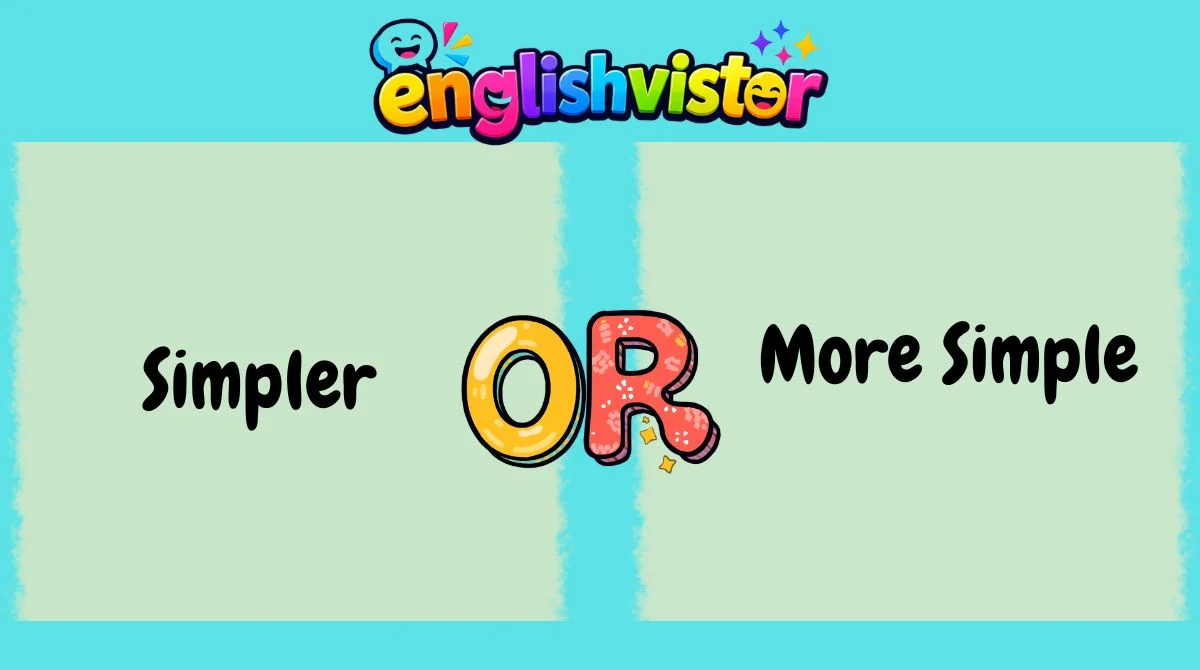
Many English learners feel confused when they see two similar expressions like “simpler” and “more simple.” Both look correct, and both can appear in English conversations, books, and articles. This makes students wonder: Which one should I use? Is one wrong?
This confusion happens because English has different ways to make comparisons. Some short adjectives usually take -er, while longer adjectives often use more before them. However, some words can work in both ways, and simple is one of those interesting examples.Simpler or More Simple.
Knowing the difference between simpler and more simple helps you speak and write English more naturally. You may need these words when comparing ideas, explaining problems, describing methods, or talking about everyday situations.
After understanding this topic, you will know when to use simpler, when to use more simple, why both forms exist, and which one sounds more natural in modern English. You will also learn common mistakes students make and easy tricks to remember the correct choice.
English does not always follow one fixed pattern. Sometimes grammar rules depend on meaning, style, and the way native speakers use words. This topic is a good example of how small differences can make your English sound clearer and more confident.Simpler or More Simple.
What Does “Simpler” Mean?
Simple Definition
Simpler is the comparative form of the adjective simple. It means less difficult, easier to understand, or not as complicated as something else.
We use simpler when we compare two things and show that one thing has fewer problems or requires less effort.Simpler or More Simple.
The word is made by adding -er to the adjective:
simple + er = simpler
When to Use “Simpler”
We usually use simpler in everyday English because it sounds natural and direct.
It is commonly used when talking about:
- easier ideas
- easier explanations
- easier methods
- less complicated systems
- easier choices
For example:
- This method is simpler than the old one.
- Her explanation was simpler and easier to understand.Simpler or More Simple.
Grammar Rule of “Simpler”
Short adjectives often form their comparative degree by adding -er.
Examples:
- small → smaller
- fast → faster
- young → younger
- simple → simpler
The general structure is:
Subject + verb + simpler + than + comparison
Examples:
- This book is simpler than that book.
- My new plan is simpler than my previous plan.
Example Sentences Using “Simpler”
- This computer program is simpler than the previous version.
- I need a simpler explanation because this topic is difficult.
- Her new design looks simpler but works better.Simpler or More Simple.
- Learning English becomes simpler with regular practice.
- This recipe is simpler than the one I found online.
- The teacher gave us a simpler way to solve the problem.
- A short message is sometimes simpler and clearer.
- The second question was simpler than the first one.
Common Learner Confusion About “Simpler”
Many students think that because simple has two syllables, they should always use more simple. This is not necessary.
The word simple can naturally take -er, so simpler is completely correct.
Incorrect thinking:
❌ “Simple has two syllables, so simpler is wrong.”
Correct understanding:
✅ “Simple is a common two-syllable adjective that can use -er.”
Native speakers frequently use simpler in daily conversation.
Examples:
- Can you make this sentence simpler?
- We need a simpler solution.
These sentences sound natural and common.Simpler or More Simple.
What Does “More Simple” Mean?
Simple Definition
More simple also compares two things. It means having a greater level of simplicity compared with something else.
It has the same basic meaning as simpler, but the style and feeling can be slightly different.
The structure is:
more + simple
Examples:
- This explanation is more simple than the first one.
- We need a more simple design.
When to Use “More Simple”
Although simpler is usually more common, more simple can be used when the speaker wants to emphasize the idea of being simple.
It is often used when:
- comparing a specific feature
- making a contrast
- explaining that something has been changed to remove complexity
- creating a more formal or careful tone
Examples:
- The new system is more simple and easier for beginners.
- We need a more simple approach for this situation.
Here, the speaker focuses strongly on the quality of being simple.Simpler or More Simple.
Grammar Rule of “More Simple”
The comparative form can sometimes be created with:
more + adjective
This pattern is common with longer adjectives:
Examples:
- more beautiful
- more interesting
- more difficult
- more important
Because simple can use both patterns, both forms may appear.Simpler or More Simple.
Structure:
Subject + verb + more simple + than + comparison
Examples:
- This design is more simple than the previous one.
- The instructions are more simple for new users.
Example Sentences Using “More Simple”
- The new instructions are more simple than the original ones.
- We need a more simple plan before starting the project.
- The teacher gave a more simple example to help students understand.Simpler or More Simple.
- The updated website has a more simple layout.
- This explanation is more simple for young learners.
- The company created a more simple process for customers.
- I prefer a more simple style when writing emails.
- The second version feels more simple and organized.
Common Learner Confusion About “More Simple”
The biggest confusion is whether more simple is grammatically wrong.Simpler or More Simple.
The answer is:
No, it is not always wrong.
However, in most everyday situations, simpler sounds more natural.Simpler or More Simple.
Compare:
- This answer is simpler. ✅ (Most common)
- This answer is more simple. ✅ (Possible, but more specific)
Many English teachers prefer simpler because it follows the normal comparative pattern for this adjective.
Still, context matters. Sometimes speakers choose more simple because they want to highlight the idea of simplicity.
Example:
“The first design was simple, but the second design is more simple.”
Here, the speaker is emphasizing a clear increase in simplicity.
Difference Between Simpler and More Simple (Detailed)
Both simpler and more simple are comparative forms of the adjective simple. They are used to compare two things and show that one thing has a lower level of difficulty or complexity.
The meaning is very close, but the way they sound and the situations where they are used can be slightly different.
In everyday English, simpler is much more common. Native speakers usually choose it because it sounds natural and follows normal comparative patterns.Simpler or More Simple.
However, more simple is also possible, especially when the speaker wants to give special importance to the idea of simplicity.
Comparison Table: Simpler vs More Simple
| Point | Simpler | More Simple |
|---|---|---|
| Basic meaning | Easier or less complicated | Having more simplicity |
| Grammar form | simple + er | more + simple |
| Common usage | Very common in daily English | Less common but correct in some situations |
| Style | Natural and conversational | More careful or formal in some contexts |
| Focus | General comparison | Strong focus on simplicity |
| Example | This method is simpler. | This method is more simple. |
| Native speaker preference | Usually preferred | Used when emphasis is needed |
Usage Difference Between Simpler and More Simple
1. “Simpler” for Everyday Comparisons
Simpler is the word you will hear most often in normal conversations.
People use it when they simply want to say that something is easier.Simpler or More Simple.
Examples:
- This explanation is simpler than the previous one.
- My new phone is simpler to use.
- The teacher gave us a simpler example.
These sentences sound natural because the speaker is making a normal comparison.
When talking with friends, classmates, teachers, or coworkers, simpler is usually the better choice.
2. “More Simple” for Extra Emphasis
More simple can be used when the speaker wants to highlight the idea of simplicity.
It can suggest that something has been made especially easy or has fewer unnecessary parts.
Examples:
- The company created a more simple payment system.
- We need a more simple solution for beginners.
Here, the speaker is not only comparing two things. They are focusing on the quality of being simple.Simpler or More Simple.
It can sound like:
“The new system has been changed to remove extra complexity.”
Grammar Logic Behind the Two Forms
English comparatives usually follow two main patterns:
Pattern 1: Short adjectives + “-er”
Many short adjectives add -er.
Examples:
- fast → faster
- tall → taller
- small → smaller
- simple → simpler
Sentence pattern:
Subject + be verb + adjective comparative + than + object
Examples:
- This road is shorter than that road.
- This lesson is simpler than yesterday’s lesson.Simpler or More Simple.
Pattern 2: More + adjective
Longer adjectives usually use more.
Examples:
- beautiful → more beautiful
- expensive → more expensive
- difficult → more difficult
Examples:
- This painting is more beautiful than the old one.
- The second exam was more difficult than the first.Simpler or More Simple.
Because simple has two syllables, some speakers choose more simple, but many still prefer simpler because it feels natural.
Sentence Structure Difference
Using “Simpler”
Structure:
Subject + verb + simpler + than + noun/pronoun
Examples:
- This method is simpler than the old method.
- Her explanation is simpler than mine.
- The new rules are simpler than before.
The sentence feels short, smooth, and natural.
Using “More Simple”
Structure:
Subject + verb + more simple + than + noun/pronoun
Examples:
- This method is more simple than the old method.Simpler or More Simple.
- The instructions are more simple for children.
- The new design is more simple than the previous design.
The structure is correct, but it puts more attention on the word simple.
Meaning Comparison: Simpler vs More Simple
Sometimes the difference is very small.Simpler or More Simple.
Compare these two sentences:
Sentence 1:
This explanation is simpler than the first one.
Meaning:
The explanation is easier to understand.
This sounds natural and common.
Sentence 2:
This explanation is more simple than the first one.Simpler or More Simple.
Meaning:
The explanation has a higher level of simplicity.
This is also understandable, but it sounds more like the speaker is emphasizing simplicity.Simpler or More Simple.
Which One Should You Use?
For most learners, the easiest rule is:
✅ Use simpler in normal conversation and writing.Simpler or More Simple.
Examples:
- Can you make it simpler?
- This way is simpler.
- The new version is simpler.
Use more simple when you specifically want to stress that something has become less complicated.
Examples:
- We need a more simple design with fewer features.
- The company wants a more simple process for customers.Simpler or More Simple.
Grammar Rules You Must Remember
Rule 1: Use “Simpler” for Most Everyday Comparisons
The most common comparative form of simple is simpler.
Examples:
✅ This question is simpler than the last one.
✅ The new app is simpler to use.
❌ This question is more simpler than the last one.
Remember that simpler already shows comparison. Do not add “more” before it.
Rule 2: Never Use “More Simpler”
A very common mistake is using both comparative forms together.Simpler or More Simple.
Incorrect:
❌ This method is more simpler.
Correct:
✅ This method is simpler.
Correct:
✅ This method is more simple.Simpler or More Simple.
Why?
Because more + simpler creates a double comparative. English does not normally use two comparative markers together.
Examples:
Incorrect:
❌ My new plan is more easier.
Correct:
✅ My new plan is easier.
Incorrect:
❌ This lesson is more simpler.
Correct:
✅ This lesson is simpler.Simpler or More Simple.
Rule 3: Use “Than” When Comparing Two Things
When comparing two things, we often use than.
Examples:
- This book is simpler than that book.
- The second example is simpler than the first.
- Your explanation is more simple than mine.
The word than shows the comparison clearly.Simpler or More Simple.
Rule 4: Choose the Word That Sounds Natural for Your Situation
Grammar is important, but natural usage also matters.
In casual English:
✅ This is simpler.
sounds better than:
⚠️ This is more simple.
However, both can communicate the same idea.Simpler or More Simple.
Think about what you want to emphasize:
- Easy comparison → simpler
- Strong focus on simplicity → more simple
Common Mistakes Students Make
Many English learners make mistakes with comparative adjectives because they learn separate rules but do not understand when to use them.
Here are the most common problems.Simpler or More Simple.
Mistake 1: Thinking “More Simple” Is Always Wrong
Some students believe that more simple is completely incorrect.Simpler or More Simple.
That is not true.
Incorrect idea:
❌ “More simple can never be used.”
Correct idea:
✅ “Simpler is more common, but more simple can also be correct.”Simpler or More Simple.
Example:
- The instructions are simpler. ✅
- The instructions are more simple. ✅
Both are understandable.
Mistake 2: Using “More Simpler”
This is one of the biggest errors.
Incorrect:
❌ This explanation is more simpler.
Why is it wrong?
Because simpler already contains the comparative meaning.
Correct:
✅ This explanation is simpler.
Or:
✅ This explanation is more simple.
Mistake 3: Using “Simple” Without Comparison
Some students forget that comparative forms need comparison.
Example:
❌ This is simpler.
This sentence can be correct, but it needs context.
Better:
✅ This method is simpler than the old one.
The listener understands what you are comparing.
Mistake 4: Choosing “More Simple” Every Time
Some learners use more simple because they think all two-syllable adjectives need “more.”
Example:
❌ This answer is more simple. (Not wrong, but often unnatural)
Better:
✅ This answer is simpler.
Common adjectives that can use -er:
- simple → simpler
- quiet → quieter
- clever → cleverer
- narrow → narrower
Easy Trick to Remember the Difference
Here is a simple memory trick:
“Simple becomes simpler in normal English.”
Think about daily conversation.
When you want to say something is easier, your brain usually chooses the shorter form:
- easy → easier
- simple → simpler
Examples:
“Can you explain it in a simpler way?”
This sounds natural because people often choose shorter comparative forms.
Another trick:
Ask yourself:
“Am I just comparing two things?”
If yes, use:
✅ simpler
Example:
- This route is simpler than the other route.
If you want to strongly describe something as having fewer complicated parts, you can use:
✅ more simple
Example:
- We need a more simple system for new users.
For beginners, remembering simpler = normal choice is enough for most situations.
Daily Life Examples of Simpler and More Simple
Understanding grammar rules is useful, but seeing real conversations makes learning much easier. In daily English, people usually use simpler more often because it sounds natural and friendly.
The following examples show how native speakers commonly use these words in real situations.
1. Talking About Learning
Student: I don’t understand this grammar rule.
Teacher: Let me explain it in a simpler way.
Here, simpler means the explanation will become easier to understand.
2. Choosing Between Two Options
Ali: Which phone should I buy?
Sara: I think this one is better because it is simpler to use.
The speaker means the phone has fewer confusing features.
3. Discussing Work
Manager: The old process takes too much time.
Employee: We should create a simpler system.
The employee wants a system with fewer steps.
4. Talking About Writing
Teacher: Your paragraph is good, but try to make it simpler.
Meaning:
Use easier words and clearer sentences.
5. Comparing Recipes
A: Which recipe do you prefer?
B: I like the second one because it is simpler and takes less time.
The second recipe requires less effort.
6. Talking About Technology
Customer: This app looks difficult.
Support Agent: The new version is simpler for beginners.
The new version is easier for people who are learning.
7. Talking About Plans
Friend 1: Our travel plan has too many details.
Friend 2: Let’s make it simpler.
The speaker wants fewer complicated steps.
8. Talking About Education
Student: The first explanation was confusing.
Teacher: Here is a simpler example.
The teacher provides an easier example.
9. Talking About Business
Business Owner: Customers are confused by our payment process.
Team Member: We need a more simple payment system.
Here, more simple emphasizes creating a system with fewer complications.
10. Talking About Design
Designer: The first design has too many details.
Client: I want a simpler design with a cleaner look.
The client wants something less complicated.
Practice Section: Choose the Correct Option
Choose simpler or more simple to complete each sentence.
1. This explanation is ______ than the previous one.
a) simpler
b) more simpler
Answer: simpler ✅
2. We need a ______ solution for new users.
a) simpler
b) more simple
Answer: Both can work, but simpler is more common. ✅
3. Can you make this sentence ______?
a) simpler
b) more simpler
Answer: simpler ✅
4. The company wants a ______ process for customers.
a) simpler
b) more simple
Answer: Both are possible. Simpler sounds more natural. ✅
5. This method is ______ than the old method.
a) simpler
b) more simple
Answer: simpler ✅
Frequently Asked Questions
What is the difference between simpler and more simple?
Simpler and more simple have almost the same meaning. Both describe something that is easier or less complicated. However, simpler is more common and sounds more natural in everyday English.
Can we use simpler in formal writing?
Yes, you can use simpler in formal writing. It is grammatically correct and commonly used in professional articles, reports, and educational materials.
Example:
“The new method provides a simpler way to complete the task.”
Is more simple grammatically correct?
Yes, more simple can be grammatically correct. It is sometimes used when the writer or speaker wants to strongly emphasize the idea of simplicity.
Example:
“We need a more simple design for beginners.”
However, simpler is usually preferred.
Is simpler better than more simple?
In most situations, yes. Simpler is the more natural choice for everyday English.
Examples:
✅ This explanation is simpler.
⚠️ This explanation is more simple.
Both are understandable, but the first sounds smoother.
Can we say “more simpler”?
No. More simpler is incorrect because it uses two comparative forms together.
Incorrect:
❌ This answer is more simpler.
Correct:
✅ This answer is simpler.
Correct:
✅ This answer is more simple.
Which word should English learners use: simpler or more simple?
For beginners, the best choice is simpler. It is common, natural, and accepted everywhere.
You can use more simple when you want to focus strongly on simplicity, but you will rarely need it in normal conversations.
Conclusion
Understanding the difference between simpler and more simple can help you make your English sound clearer and more natural. Both forms can express the idea of something becoming easier or less complicated, but they are not used equally.
In everyday English, simpler is the preferred choice. It is short, natural, and commonly used by native speakers. You can use it when comparing explanations, methods, plans, designs, or ideas.
More simple is not always wrong. It can be useful when you want to place extra attention on the quality of being simple. However, most of the time, choosing simpler will make your English sound smoother.
The best way to remember this rule is simple: when you are making a normal comparison, choose simpler. Listen to how people speak, practice with your own sentences, and over time the correct choice will feel automatic.
Small grammar differences can make a big improvement in your confidence. Keep practicing, and your English will continue becoming clearer every day.

Hi, I’m Isabella Foster, an English language writer passionate about making grammar, vocabulary, and communication skills easy to understand. At EnglishVistor, I create clear, practical, and engaging learning resources to help learners improve their English with confidence.