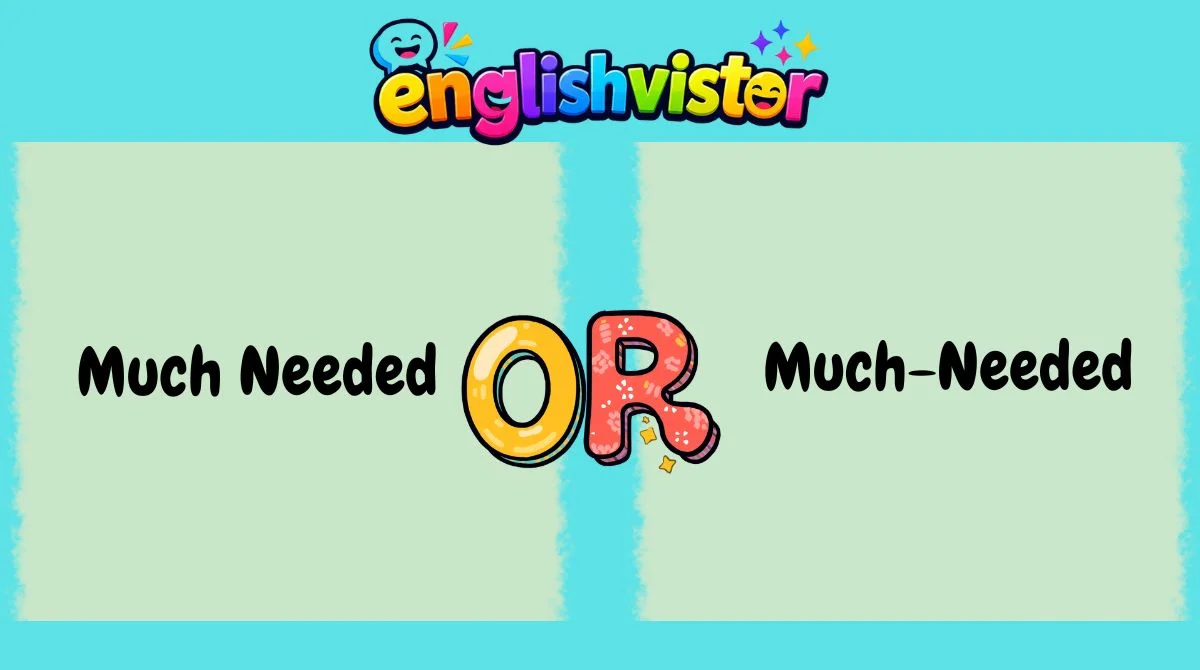
Have you ever stopped while writing and wondered, Should I write much needed or much-needed? If yes, you are not alone. This is one of the most common punctuation questions in English. Many students, writers, bloggers, and even native speakers get confused because both forms look correct.
The good news is that both forms are correct, but they are used in different situations. The choice depends on where the words appear in a sentence. Once you understand this simple grammar rule, you will know exactly when to use a hyphen and when to leave it out.
Learning this small rule can make your English writing look more natural and professional. It is useful for school assignments, emails, blogs, business writing, social media posts, and everyday conversations. Even a tiny punctuation mark like a hyphen can change how clearly your sentence reads.
Many English learners also search for similar grammar topics, such as Crews vs Cruise, because English contains many words and expressions that look or sound confusing.
Like Crews vs Cruise, understanding the much needed or much needed hyphen rule becomes easy when you learn the meaning and grammar behind each form instead of trying to memorize random examples.
By the end of this guide, you will clearly understand:
- What “much needed” means
- When to write “much-needed” with a hyphen
- When not to use the hyphen
- Simple grammar rules anyone can remember
- Real-life examples that make the rule easy
If you have ever been unsure while writing, this lesson will remove that confusion once and for all.
What Does “Much Needed” Mean?
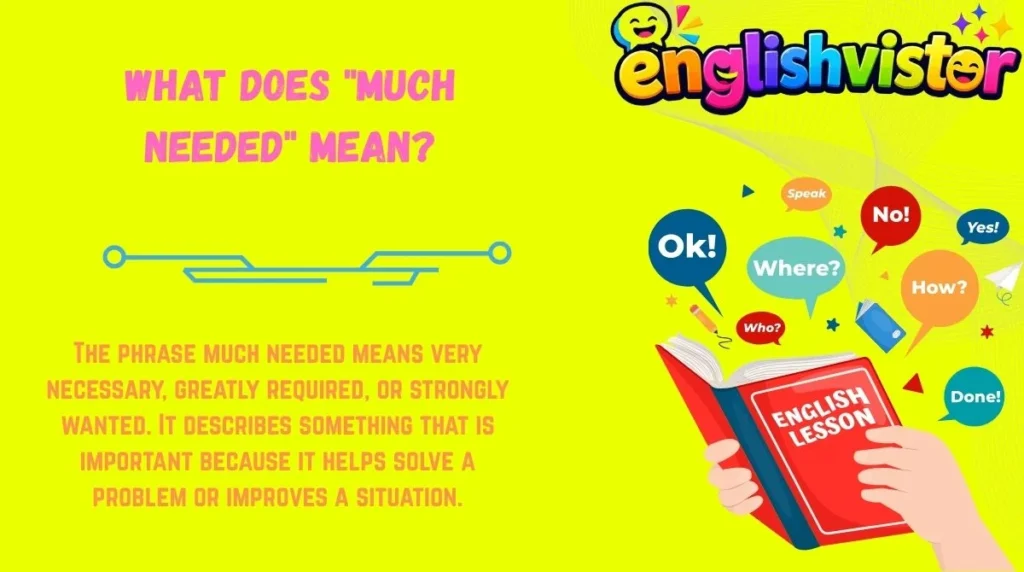
The phrase much needed means very necessary, greatly required, or strongly wanted. It describes something that is important because it helps solve a problem or improves a situation.
The word much is an adverb. It tells us the degree of need. The word needed is the past participle of the verb need.
When these two words come after the noun or after linking verbs such as is, was, were, seems, became, felt, remains, they are usually written without a hyphen.
Simple Definition
Much needed = very necessary or badly needed.
When to Use “Much Needed”
Use much needed without a hyphen when it comes after the noun or after a verb.
Examples include:
- The vacation was much needed.
- Your advice is much needed.
- The rain was much needed after weeks of dry weather.
- Their support remains much needed.
- The break felt much needed.
- Medical supplies are much needed in the village.
- A good night’s sleep is much needed after a long trip.
- His encouragement was much needed during the difficult time.
In all these examples, much needed follows a verb. It is not directly describing the noun before it.
Grammar Rule
Think about the sentence structure.
Subject + Linking Verb + Much Needed
Examples:
- The help was much needed.
- The money is much needed.
- The change seems much needed.
- The rest felt much needed.
Because the phrase comes after the verb, English normally does not use a hyphen.
Why This Form Has No Hyphen
Hyphens often join two words that work together before a noun. When the words appear after the noun, the hyphen is usually unnecessary because the meaning is already clear.
Compare these examples:
- The holiday was much needed. ✅
- The holiday was much-needed. (Sometimes accepted in modern writing, but most style guides prefer no hyphen here.)
Most editors recommend writing it without the hyphen after linking verbs.
More Everyday Examples
Here are more simple examples.
- The rain was much needed after the hot summer.
- Her kindness was much needed.
- The hospital’s new equipment is much needed.
- The team’s confidence was much needed before the final match.
- Your feedback is much needed.
- Fresh ideas are much needed in our company.
- Peace is much needed around the world.
- Extra volunteers are much needed this weekend.
Common Learner Confusion
Many learners believe the hyphen should always be used because they often see phrases like much-needed break or much-needed vacation in newspapers and books.
That creates confusion.
Remember this easy point:
- The break was much needed. ✅
- The much-needed break helped everyone. ✅
Both are correct because they follow different grammar patterns.
This kind of confusion is similar to topics such as Crews vs Cruise, where understanding grammar and meaning is more useful than simply memorizing spelling. As with Crews vs Cruise, noticing the position of the words makes the correct choice much easier.
Quick Tips
- Use much needed after a linking verb.
- It means very necessary.
- No hyphen is normally needed after the noun.
- This form is common in everyday speech and writing.
What Does “Much-Needed” Mean?
The hyphenated form much-needed has the same basic meaning: very necessary or greatly needed.
The difference is where it appears in the sentence.
When much and needed come before a noun and work together to describe that noun, they form a compound adjective. English usually joins compound adjectives with a hyphen before the noun.
Simple Definition
Much-needed = very necessary (used before a noun).
When to Use “Much-Needed”
Use much-needed before a noun.
Examples:
- We needed a much-needed vacation.
- She enjoyed a much-needed rest.
- They received much-needed financial support.
- The city welcomed much-needed rainfall.
- The school bought much-needed computers.
- The charity provided much-needed food.
- He took a much-needed break.
- The company announced much-needed improvements.
Here, much-needed directly describes the noun that follows.
Grammar Rule
Sentence pattern:
Much-Needed + Noun
Examples:
- a much-needed holiday
- a much-needed change
- much-needed repairs
- much-needed encouragement
- much-needed medical care
The hyphen shows that the two words work together as one adjective.
Why the Hyphen Is Important
Without the hyphen before a noun, readers may pause because they first read much separately from needed.
The hyphen immediately tells the reader that both words belong together.
Compare these examples.
Correct:
- We finally had a much-needed vacation.
Less preferred before a noun:
- We finally had a much needed vacation.
Although some modern publications may omit the hyphen, most grammar experts and style guides recommend using it before the noun because it improves clarity.
More Example Sentences
- Everyone appreciated the much-needed rain.
- The doctor recommended a much-needed rest.
- They received much-needed funding.
- The workers welcomed a much-needed holiday.
- The community got much-needed supplies.
- The school introduced much-needed safety rules.
- The project received much-needed support.
- She took a much-needed day off.
Common Learner Confusion
Many students think much-needed and much needed are different expressions with different meanings.
They are not.
Both mean very necessary.
The only real difference is their position in the sentence.
Just like grammar topics such as Crews vs Cruise, understanding the rule is more important than trying to remember isolated examples. Readers searching for Crews vs Cruise often discover that context decides the correct choice, and the same idea applies here. Once you understand the position of the words, the much needed or much needed hyphen rule becomes simple.
Easy Reminder
Ask yourself one question.
Is the phrase directly describing a noun?
- Yes → Use much-needed.
- No → Use much needed.
Examples:
- A much-needed break. ✅
- The break was much needed. ✅
- Much-needed improvements helped the town. ✅
- Those improvements were much needed. ✅
Quick Summary
- Much-needed is a compound adjective.
- Use it before a noun.
- The hyphen joins the two words into one describing phrase.
- It improves clarity and follows standard English punctuation.
Difference Between Much Needed and Much-Needed (Part 1)
At first glance, these two forms look almost identical. The only visible difference is the hyphen. However, that small punctuation mark tells readers how the words function in the sentence.Much Needed or Much-Needed.
The easiest way to understand the difference is this:
| Much Needed | Much-Needed |
|---|---|
| Usually comes after a linking verb | Comes before a noun |
| No hyphen | Hyphen required in most style guides |
| Predicate adjective | Compound adjective |
| Example: The help was much needed. | Example: We received much-needed help. |
| Describes the subject after the verb | Describes the noun directly |
Many English learners who study topics like Crews vs Cruise notice that English often depends on context rather than spelling alone. The same principle applies here. Whether you write much needed or much-needed depends on where the phrase appears, not on a change in meaning.Much Needed or Much-Needed.
Difference Between Much Needed and Much-Needed (Detailed)
The meaning of much needed and much-needed is exactly the same. Both mean very necessary, greatly needed, or badly needed.
The real difference is their job in a sentence. One works after a linking verb, while the other works before a noun.
If you remember this one grammar point, you will rarely make a mistake.Much Needed or Much-Needed.
Many learners who study confusing English topics, such as Crews vs Cruise, notice that English often depends on sentence structure. Just like Crews vs Cruise, the position of the words tells you which form is correct.
Comparison Table
| Feature | Much Needed | Much-Needed |
|---|---|---|
| Hyphen | No | Yes |
| Meaning | Very necessary | Very necessary |
| Grammar Role | Predicate adjective | Compound adjective |
| Position | After a linking verb | Before a noun |
| Formal Writing | Preferred after verbs | Preferred before nouns |
| Example | The support was much needed. | We received much-needed support. |
Usage Difference
Use much needed when the phrase comes after a linking verb.Much Needed or Much-Needed.
Examples:
- The rest was much needed.
- The advice was much needed.
- The rain is much needed.
- Their help remains much needed.
Use much-needed when it comes before a noun.
Examples:
- We enjoyed a much-needed holiday.
- She took a much-needed break.
- They received much-needed assistance.
- The city welcomed much-needed rainfall.Much Needed or Much-Needed.
Notice that the meaning does not change. Only the sentence structure changes.
Grammar Logic
English often joins two or more words with a hyphen when they work together before a noun.
Examples:
- well-known author
- full-time job
- long-term plan
- much-needed support
After the noun or after a linking verb, the hyphen usually disappears.Much Needed or Much-Needed.
Compare:
- The author is well known.
- The job is full time in some styles.
- The plan is long term in some styles.
- The support was much needed.
This is a common pattern in English grammar.
Sentence Structure Difference
Pattern 1
Subject + Linking Verb + Much Needed
Examples
- The vacation was much needed.
- Your kindness is much needed.
- Extra workers are much needed.
Pattern 2
Much-Needed + Noun
Examples
- a much-needed vacation
- much-needed kindness
- much-needed workers
Meaning Comparison
There is no difference in meaning.
Both forms express something that is important, useful, or necessary.Much Needed or Much-Needed.
Compare these pairs.
- The break was much needed.
- We finally took a much-needed break.
- The money was much needed.
- They received much-needed money.
- The rain was much needed.
- Farmers welcomed the much-needed rain.
Each pair communicates the same idea.Much Needed or Much-Needed.
Which Form Do Style Guides Prefer?
Most modern English style guides recommend this simple rule.
- Use a hyphen before a noun.
- Do not use a hyphen after a linking verb.
Following this advice makes your writing look natural and professional.Much Needed or Much-Needed.
Common Situations
Use much-needed before nouns such as:
- break
- vacation
- rest
- support
- change
- improvement
- funding
- rain
- help
- advice
Use much needed after verbs like:
- is
- was
- were
- seems
- became
- remains
- felt
- looked
Remember the Pattern
Before a noun?
✅ Much-needed
After a verb?
✅ Much needed
That single question can help you choose the correct form almost every time.
Like Crews vs Cruise, understanding the grammar is much easier than memorizing dozens of examples. Many learners search for Crews vs Cruise because English spelling can be confusing, but grammar rules usually make the answer clear.Much Needed or Much-Needed.
Grammar Rules You Must Remember
Rule 1: Use a Hyphen Before a Noun
When the phrase describes a noun directly, use much-needed.Much Needed or Much-Needed.
Examples
- We enjoyed a much-needed vacation.
- She received much-needed support.
- The hospital bought much-needed equipment.
Rule 2: Do Not Use a Hyphen After a Linking Verb
When the phrase follows verbs like is, was, or were, use much needed.Much Needed or Much-Needed.
Examples
- The vacation was much needed.
- The support is much needed.
- The equipment was much needed.
Rule 3: Keep the Meaning the Same
The hyphen changes the grammar, not the meaning.
Examples
- We needed a much-needed break.Much Needed or Much-Needed.
- The break was much needed.
Both sentences express the same idea.Much Needed or Much-Needed.
Rule 4: Follow Standard Style in Formal Writing
If you are writing essays, reports, blogs, or business emails, follow the standard rule.
- Before a noun → much-needed
- After a verb → much needed
This makes your writing clearer and easier to read.Much Needed or Much-Needed.
Many grammar lessons, including topics like Crews vs Cruise, show that following standard usage helps readers understand your message quickly.
Common Mistakes Students Make
Students often make small punctuation mistakes because they focus only on the words instead of the sentence structure.
Here are the most common errors.Much Needed or Much-Needed.
Mistake 1: Forgetting the Hyphen Before a Noun
❌ We had a much needed break.
✅ We had a much-needed break.
Tip
If the phrase comes immediately before a noun, add the hyphen.Much Needed or Much-Needed.
Mistake 2: Adding a Hyphen After the Verb
❌ The break was much-needed.
✅ The break was much needed.
Tip
After is, was, were, and similar verbs, remove the hyphen.Much Needed or Much-Needed.
Mistake 3: Thinking the Meanings Are Different
Some learners think:
- much needed = one meaning
- much-needed = another meaning
That is incorrect.
Both mean very necessary.
Only the grammar changes.Much Needed or Much-Needed.
Mistake 4: Copying Every Example You See Online
Different websites sometimes follow different style guides.
Instead of copying examples, understand the grammar.
This is the same advice teachers give for confusing word pairs such as Crews vs Cruise. Grammar rules are more reliable than memorized examples.Much Needed or Much-Needed.
Mistake 5: Using Too Many Hyphens
Some students begin adding hyphens everywhere.
Examples
❌ The weather is much-needed.
❌ The help remains much-needed.
Correct
✅ The weather is much needed.
✅ The help remains much needed.
Always check where the phrase appears.Much Needed or Much-Needed.
Easy Correction Tips
- Find the noun.
- Look at the position of the phrase.
- Before the noun? Use a hyphen.
- After the verb? Remove the hyphen.
- Read the sentence aloud. If it sounds natural, you probably have the correct form.Much Needed or Much-Needed.
Easy Trick to Remember the Difference
Grammar becomes easier when you have a simple memory trick.
Here is one that many students find helpful.
Think of the Letter B
B = Before
If much needed comes Before a noun, connect the words with a hyphen.Much Needed or Much-Needed.
Example
- a much-needed opportunity
Think of the Letter A
A = After
If the phrase comes After a linking verb, leave the words open.Much Needed or Much-Needed.
Example
- The opportunity was much needed.
Another Simple Trick
Ask yourself:
What comes next?
If a noun comes next:
Much Needed or Much-Needed.
If a verb came just before:
Use much needed
Real-Life Logic
Imagine a gift box.
Before the noun, the two words stay together like one package.Much Needed or Much-Needed.
Much-needed gift
After the verb, the package opens.
The gift was much needed.
This picture helps many learners remember the rule.
Quick Memory Chart
- Before noun → much-needed
- After verb → much needed
Keep this rule in mind whenever you write.
It is just as useful as remembering the difference between Crews vs Cruise, where one small detail changes the correct choice.Much Needed or Much-Needed.
Daily Life Examples
These sentences show how native speakers naturally use both forms.
- I finally took a much-needed vacation.
- That vacation was much needed after months of work.
- We received much-needed financial help.
- The financial help was much needed.
- The town enjoyed much-needed rain.
- The rain was much needed by local farmers.
- She took a much-needed day off.
- The day off was much needed.
- Our school received much-needed books.
- Those books were much needed by the students.Much Needed or Much-Needed.
Many learners who practice grammar topics like Crews vs Cruise improve faster because they focus on real conversations instead of memorizing isolated rules. Reading and speaking examples like these make the much needed or much needed hyphen rule feel natural.
Practice Section
Test your understanding of the much needed or much-needed hyphen rule. Choose the correct option in each sentence.
1. We finally enjoyed a ______ vacation.
- A. much needed
- B. much-needed
✅ Answer: B. much-needed
Why?
The phrase comes before the noun “vacation,” so it works as a compound adjective.
2. The vacation was ______ after a busy year.
- A. much needed
- B. much-needed
✅ Answer: A. much needed
Why?
The phrase comes after the linking verb “was.”
3. The hospital received ______ medical supplies.
- A. much needed
- B. much-needed
✅ Answer: B. much-needed
Why?
The phrase describes the noun “medical supplies.”
4. Your advice is ______ right now.
- A. much needed
- B. much-needed
✅ Answer: A. much needed
Why?
The phrase follows the linking verb “is.”
5. They welcomed the ______ rain after months of drought.
- A. much needed
- B. much-needed
✅ Answer: B. much-needed
Why?
The phrase comes directly before the noun “rain.”
Quick Review
Remember these two simple patterns:
- ✅ Much-needed + noun
- ✅ Subject + linking verb + much needed
If you can identify the position of the phrase in a sentence, choosing the correct form becomes easy.
Like other grammar topics such as Crews vs Cruise, practicing with real examples is the best way to build confidence. The more you read and write, the more natural the rule will become.
FAQs
What is the difference between much needed and much-needed?
Both expressions mean very necessary or badly needed. The only difference is grammar. Much-needed is used before a noun, while much needed usually comes after a linking verb such as is or was.
Can we use much needed in questions?
Yes. The same grammar rule applies in questions.
Examples:
- Is this help much needed?
- Was the change much needed?
If the phrase comes before a noun, use the hyphen.
- Is this a much-needed change?
Is much-needed formal or informal?
It is accepted in both formal and informal English. You will see it in newspapers, books, business writing, academic writing, blogs, and everyday communication.
Is it wrong to write much needed without a hyphen before a noun?
Many readers will still understand the sentence, but most style guides recommend using the hyphen before a noun because it improves clarity.
Preferred:
- We needed a much-needed break.
Why do we remove the hyphen after the verb?
After a linking verb, the phrase is no longer acting as a compound adjective before a noun. Since its meaning is already clear, the hyphen is usually unnecessary.
Example:
- The break was much needed.
How can I remember the rule easily?
Use this simple memory tip:
- Before a noun → much-needed
- After a verb → much needed
If you remember that one rule, you will use both forms correctly in almost every situation.
Many English learners who study confusing topics like Crews vs Cruise find that small grammar patterns become easy once they understand the logic instead of memorizing random examples.Much Needed or Much-Needed.
Conclusion
Understanding the much needed or much-needed hyphen rule is easier than it first appears. The meaning of both expressions is the same—they both describe something that is very necessary or badly needed. The only difference is where the phrase appears in the sentence.Much Needed or Much-Needed.
When the phrase comes before a noun, use much-needed with a hyphen because it acts as a compound adjective. When it comes after a linking verb, write much needed without a hyphen. This simple rule follows standard English grammar and is accepted by most style guides.
The best way to master this topic is through regular reading, writing, and speaking. Pay attention to how newspapers, books, and trusted English resources use the expression. Practice creating your own sentences until the pattern feels natural.
Grammar becomes much less confusing when you understand the reason behind the rule. Just as learners improve by studying topics like Crews vs Cruise, learning the logic behind punctuation helps you write more confidently. Keep practicing, and soon choosing between much needed and much-needed will become second nature.

Hi, I’m Isabella Foster, an English language writer passionate about making grammar, vocabulary, and communication skills easy to understand. At EnglishVistor, I create clear, practical, and engaging learning resources to help learners improve their English with confidence.