Many English learners get confused when they see due to and do to. At first glance, these two expressions look almost the same. They sound similar when spoken quickly, and they only differ by one letter. Because of this, many students use them incorrectly in writing.Due To or Do To.
The confusion becomes even bigger because due to is very common in English, while do to is much less common. Some learners think both expressions mean the same thing. Others are not sure which one should be used in a sentence.
Understanding the difference is important because using the wrong expression can change the meaning of your sentence completely. A small mistake can make your writing sound unnatural or confusing.Due To or Do To.
The good news is that the difference is actually quite simple once you learn the grammar behind each expression.Due To or Do To.
By the end of this guide, you will clearly understand what due to means, what do to means, when to use each one, common mistakes to avoid, and an easy trick to remember the difference forever. You will also see many real-life examples that make the topic easy to understand.
What Does “Due To” Mean?
Simple Definition
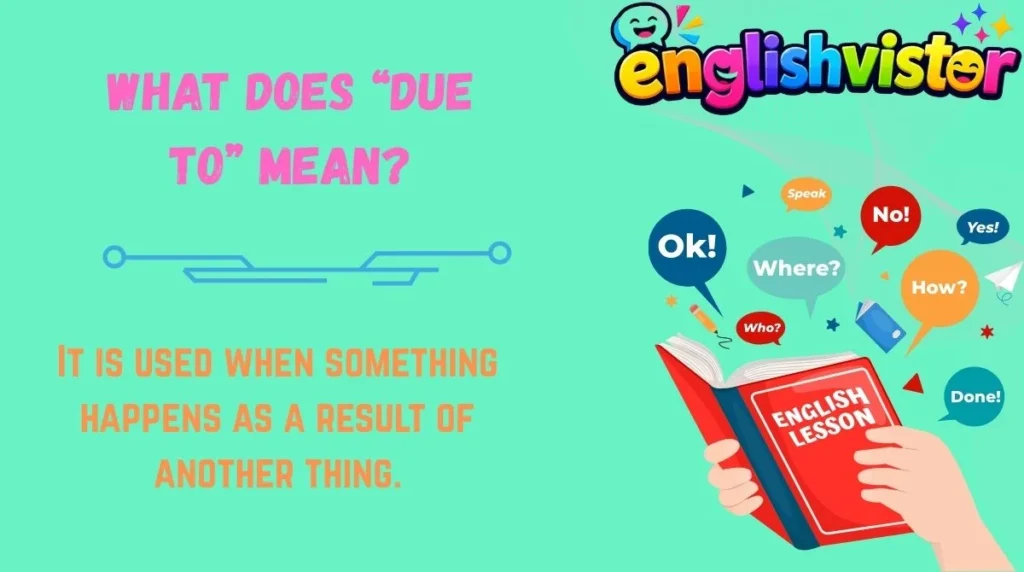
Due to means because of or caused by.
It is used when something happens as a result of another thing.
When to Use It
Use due to when you want to explain the reason for something.Due To or Do To.
Examples:
- The game was canceled due to rain.
- The flight was delayed due to bad weather.
- The school closed due to heavy snow.
In all of these examples, the phrase tells us the reason why something happened.Due To or Do To.
Grammar Rule
Traditionally, due to acts like an adjective phrase. It describes a noun.Due To or Do To.
Example:
- The cancellation was due to rain.
Here, due to rain describes the noun cancellation.
In modern English, many native speakers also use due to in places where they could use because of.
Example:
- We stayed home due to the storm.
This usage is widely accepted today.
Example Sentences
- The match ended early due to lightning.
- The store closed due to a power outage.
- She missed class due to illness.
- Due to traffic, we arrived late.
- The road was blocked due to flooding.
- The event was postponed due to safety concerns.
- Production stopped due to a machine problem.
- The team lost due to several mistakes.
Common Learner Confusion
Many learners think due to is a verb phrase because it contains the word to. It is not a verb phrase.
Remember:
- Due to = because of
- Due to = reason or cause
If you can replace it with because of, the sentence is usually correct.Due To or Do To.
Example:
- The picnic was canceled due to rain.
- The picnic was canceled because of rain.
Both sentences have the same meaning.
What Does “Do To” Mean?
Simple Definition
Do to means perform an action to someone or something.
Here, do is a verb and to is a preposition.
This expression is much less common than due to.
When to Use It
Use do to when talking about an action that affects another person or thing.
Examples:
- What did you do to the computer?
- Don’t do that to your brother.
- What has the storm done to the town?
In these sentences, someone or something is receiving the action.Due To or Do To.
Grammar Rule
The structure is:
do + something + to + person/thing
Examples:
- What did you do to my phone?
- Please do no harm to animals.
- The fire did serious damage to the building.
The word do is functioning as a verb.
Example Sentences
- What did you do to your hair?
- Don’t do that to the dog.Due To or Do To.
- What happened? What did you do to the machine?
- The accident did damage to the car.
- Never do harm to others.
- What has stress done to your health?
- Please don’t do anything to the painting.
- The flood did serious damage to local farms.
Common Learner Confusion
Students often write do to when they actually mean due to.
Incorrect:
- The meeting was canceled do to rain.
Correct:
- The meeting was canceled due to rain.
This is one of the most common spelling mistakes in English writing.Due To or Do To.
Difference Between Due To and Do To
Understanding the difference becomes easy when you compare them side by side.
| Feature | Due To | Do To |
|---|---|---|
| Meaning | Because of | Perform an action on something |
| Part of Speech | Phrase showing cause | Verb + preposition |
| Usage | Gives a reason | Shows an action |
| Common? | Very common | Less common |
| Can Replace With “Because Of”? | Yes | No |
| Example | Due to rain | Do damage to the wall |
Meaning Difference
Due to explains why something happened.Due To or Do To.
Example:
- School was canceled due to snow.Due To or Do To.
The snow caused the cancellation.
Do to describes an action.
Example:
- What did you do to the door?
Someone performed an action on the door.
Grammar Logic
With due to, you are talking about a cause.Due To or Do To.
With do to, you are talking about an action.
Compare:
- The trip was canceled due to weather.
- What did the weather do to the roads?
The first sentence explains a reason.
The second sentence explains an action or effect.Due To or Do To.
Sentence Structure Difference
Due to:
- Result + due to + cause
Example:
- The delay was due to traffic.Due To or Do To.
Do to:
- Do + action + to + object
Example:
- What did you do to the car?
Meaning Comparison
Look at these examples:
Due to
- The concert ended early due to rain.Due To or Do To.
Meaning:
Rain caused the concert to end early.
Do To
- What did the rain do to the field?
Meaning:
What effect did the rain have on the field?
The meanings are completely different.
Grammar Rules You Must Remember
Rule 1: Use “Due To” for Reasons
If you are explaining why something happened, use due to.Due To or Do To.
Example:
- The flight was canceled due to fog.
The fog is the reason.
Rule 2: Use “Do To” for Actions
If someone or something performs an action, use do to.Due To or Do To.
Example:
- What did you do to the laptop?
An action was performed on the laptop.Due To or Do To.
Rule 3: Replace “Due To” with “Because Of”
A quick test is to replace due to with because of.
Example:
- The game was canceled due to rain.
- The game was canceled because of rain.
The meaning stays the same.
Rule 4: Never Use “Do To” When You Mean “Because Of”
Incorrect:
- The match ended do to bad weather.
Correct:
- The match ended due to bad weather.
This mistake is extremely common among English learners.
Common Mistakes Students Make
Mistake 1: Spelling “Due To” as “Do To”
Wrong:
- School closed do to snow.
Correct:
- School closed due to snow.
Why it happens:
The phrases sound similar when spoken quickly.
Tip:
Whenever you mean because of, write due to.
Mistake 2: Using “Due To” for an Action
Wrong:
- What due to the computer?
Correct:
- What did you do to the computer?
Why it happens:
Students confuse the two expressions because of their similar pronunciation.
Mistake 3: Forgetting the Meaning
Wrong:
- The storm due to the house.
Correct:
- The storm did damage to the house.
Reason:
The sentence describes an action, not a cause.
Mistake 4: Mixing the Structures
Wrong:
- What did you due to the machine?
Correct:
- What did you do to the machine?
Remember:
Do is a verb.
Due is not a verb.
Easy Correction Tips
Ask yourself:
- Am I explaining a reason?
- Use due to.
- Am I talking about an action?
- Use do to.
This simple question solves most mistakes.
Easy Trick to Remember the Difference
A memory trick can help you remember these expressions forever.
Think About the Letter “E”
The word due contains the letter E.
Think:
E = Explanation
When you explain why something happened, use due to.
Example:
- The train was late due to fog.
You are explaining the reason.
Think About the Word “Do”
The word do means action.
If somebody is doing something, use do to.
Example:
- What did you do to the bike?
An action happened.
Quick Formula
- Due to = reason
- Do to = action
If you remember only these two ideas, you will usually choose the correct expression.
Daily Life Examples
Here are some common spoken English examples.
- We stayed home due to heavy rain.
- The bus was late due to traffic.
- The store closed early due to a power failure.
- What did you do to your phone?
- What did the dog do to the couch?
- The storm did damage to several houses.
- She missed work due to a fever.
- The event was canceled due to safety issues.
- What did you do to your shirt? It’s covered in paint.
- The flood did serious harm to local roads.
These are the kinds of sentences you may hear every day.
Practice Section
Choose the correct option: due to or do to.
1.
The game was canceled _____ heavy rain.
A. due to
B. do to
2.
What did you _____ the computer?
A. due to
B. do to
3.
The delay happened _____ traffic.
A. due to
B. do to
4.
What did the puppy _____ your shoes?
A. due to
B. do to
5.
The school closed _____ bad weather.
A. due to
B. do to
Answers
- A — due to
- B — do to
- A — due to
- B — do to
- A — due to
FAQs
What is the difference between due to and do to?
Due to means because of and explains a reason. Do to refers to an action performed on someone or something. One shows a cause, while the other shows an action.
Can I replace due to with because of?
In many cases, yes. Both expressions often express a reason. For example, “The event was canceled due to rain” and “The event was canceled because of rain” have the same meaning.
Is do to common in English?
No. Due to is much more common. Do to appears only when talking about actions affecting people or things.
Why do people confuse due to and do to?
The phrases sound very similar when spoken. Many writers accidentally type do to when they actually mean due to.
Is due to formal or informal?
Due to can be used in both formal and informal English. It appears in everyday conversations, business writing, news reports, and academic texts.
How can I remember which one is correct?
Remember this simple rule: due to = reason and do to = action. If you are explaining why something happened, use due to. If someone performed an action, use do to.
Conclusion
The difference between due to and do to is easier than many learners think. Although the two expressions sound similar, they have completely different meanings.
Due to means because of and is used to explain the reason something happens. It focuses on causes and explanations. Do to, on the other hand, involves an action being performed on a person or thing. It focuses on what someone or something did.
A helpful way to remember the difference is to connect due to with a reason and do to with an action. Whenever you are unsure, ask yourself whether you are explaining a cause or describing something that happened to an object or person.
The more examples you read and practice, the more natural the difference will become. Keep using these expressions in your speaking and writing, and soon choosing the correct one will feel easy and automatic.

Hi, I’m Isabella Foster, an English language writer passionate about making grammar, vocabulary, and communication skills easy to understand. At EnglishVistor, I create clear, practical, and engaging learning resources to help learners improve their English with confidence.